

F
or decades, quantum computing existed largely in the realm of theoretical physics and academic papers. Today, it is rapidly emerging as one of the most transformative technologies of our time. From drug discovery to financial modeling, climate science to artificial intelligence, quantum processors are poised to solve problems that have been mathematically intractable for classical supercomputers. But what exactly makes them so powerful, and what does that mean for the global economy?Understanding the Quantum Advantage
Unlike classical computers that process information in binary bits (0s and 1s), quantum computers leverage quantum bits, or qubits. Thanks to principles like superposition and entanglement, qubits can exist in multiple states simultaneously. This allows quantum systems to evaluate vast numbers of possibilities in parallel, rather than sequentially.
The practical implications are staggering. A classical computer might take thousands of years to simulate a complex molecular interaction. A sufficiently advanced quantum computer could complete the same calculation in minutes. This "quantum advantage" is already being demonstrated in controlled laboratory environments, and commercial applications are on the horizon.
"We are standing at the threshold of a new computational paradigm. The industries that adapt to quantum algorithms today will define the economic landscape of tomorrow." — Prof. David Chen, MIT Quantum Initiative
Key Industries Set for Disruption
While quantum technology is still in its early commercial stages, several sectors are already preparing for the shift:
- Pharmaceuticals & Healthcare: Molecular simulation will accelerate drug discovery, enabling personalized medicine and rapid responses to emerging pathogens.
- Finance & Insurance: Portfolio optimization, risk assessment, and fraud detection will operate at unprecedented speeds and accuracy.
- Logistics & Supply Chain: Complex routing problems, inventory management, and global distribution networks will be optimized in real-time.
- Cybersecurity: While quantum computers threaten traditional encryption, they also enable quantum key distribution, creating theoretically unbreakable communication channels.
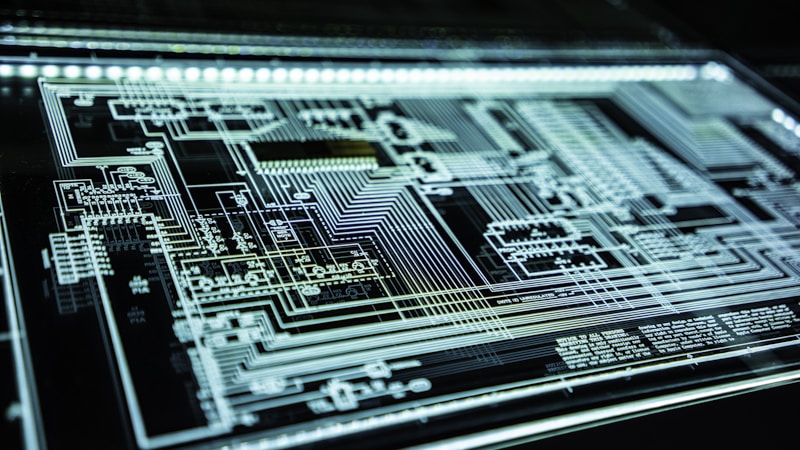
Quantum cryptography networks are being tested across major metropolitan areas worldwide.
The Road Ahead: Challenges and Realities
Despite the hype, significant hurdles remain. Quantum processors are extremely sensitive to environmental noise, requiring near-absolute-zero temperatures and sophisticated error correction. Scalability from dozens of qubits to the millions needed for fault-tolerant computing remains a formidable engineering challenge.
However, investment is pouring into the sector. Governments, tech giants, and startups have collectively committed over $15 billion to quantum research since 2020. Hybrid approaches—combining classical and quantum systems—are already being deployed in cloud environments, allowing researchers and enterprises to experiment without waiting for fully fault-tolerant machines.
Partnered with The Daily Pulse
Preparing for a Quantum Future
Organizations don't need to wait for perfect hardware to start preparing. "Quantum readiness" involves auditing current encryption protocols, training workforce talent in quantum algorithms, and identifying high-value use cases where quantum advantage will materialize first. Universities are rapidly expanding quantum computing curricula, and corporate partnerships with research institutions are becoming standard practice.
The trajectory is clear: quantum computing will not replace classical systems, but it will augment them. The companies and nations that integrate quantum thinking into their strategic planning today will hold a decisive competitive advantage tomorrow.