
HOUSTON, TX — In a moment that will be etched in history books for generations to come, the Artemis III mission successfully landed on the Moon's surface early Thursday morning, carrying humanity's first woman and first person of color to walk on the lunar surface. The mission, which launched from Kennedy Space Center on December 8, represents the culmination of decades of planning, international collaboration, and scientific innovation.
The Orion spacecraft, carrying Commander Jessica Watkins, Pilot Rajchel Okafor, and Mission Specialist David Chen, completed a 6-day journey to the Moon before the crew transferred to the SpaceX Starship HLS (Human Landing System) for the final descent to the lunar surface near the Shackleton Crater at the Moon's South Pole.
A Historic First Step
At 6:47 AM EST, the Starship HLS touched down on the lunar surface, triggering a wave of emotion at NASA's Mission Control in Houston. The room erupted in cheers and applause as Flight Director Brenda Wong confirmed the successful landing.
"Houston, Antares has landed. The surface is visible through the viewport — it's exactly as we dreamed it would be. The future of space exploration is here."
— Commander Jessica Watkins, Artemis III Mission Commander
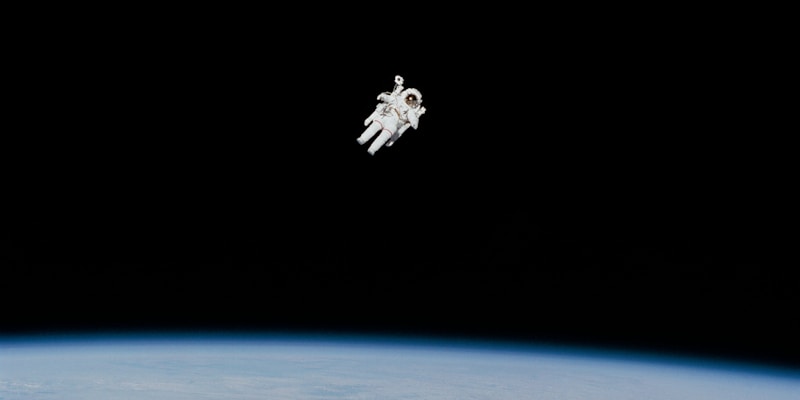
Commander Watkins, a geologist and astrophysicist, became the first woman to set foot on the Moon during the mission's first Extravehicular Activity (EVA), which began approximately 6 hours after landing. Her first steps were broadcast live to an estimated 2 billion viewers worldwide, drawing comparisons to Neil Armstrong's historic moonwalk in 1969.
Scientific Objectives and Discoveries
The Artemis III mission carries an ambitious scientific payload designed to advance our understanding of the Moon and prepare for future deep-space exploration. Key objectives include:
- Water Ice Analysis: Collecting and analyzing subsurface ice deposits at the permanently shadowed regions of the Shackleton Crater, which could support future lunar habitats and serve as a resource for rocket fuel.
- Geological Mapping: Deploying advanced seismometers to study the Moon's internal structure and understand the frequency and intensity of moonquakes.
- Radiation Studies: Testing new radiation shielding materials and measuring radiation exposure levels at the lunar surface to inform the design of future long-duration missions to Mars.
- ISRU Demonstration: Operating the first in-situ resource utilization experiments, converting lunar regolith into oxygen and building materials.
Early results from the mission have already exceeded expectations. Dr. Patel, the mission's chief scientist, reported that the water ice concentrations found in the landing area are "significantly higher than our pre-mission models predicted," opening new possibilities for sustainable lunar operations.
🚀 Key Mission Facts
Crew: Jessica Watkins (Commander), Rajchel Okafor (Pilot), David Chen (Mission Specialist)
Landing Site: Shackleton Crater, Moon's South Pole
Surface Duration: 6.5 days
Mission Duration: 25 days total
Sample Return: Approximately 50 kg of lunar material
International Collaboration
The Artemis program represents one of the most significant international partnerships in space exploration history. Alongside NASA, the mission involves contributions from the European Space Agency (ESA), the Japan Aerospace Exploration Agency (JAXA), the Canadian Space Agency (CSA), and the Brazilian Space Agency (AEB).
ESA provided the European Service Module for the Orion spacecraft, while JAXA contributed the lunar roving vehicle used during surface operations. CSA's robotic arm system, an evolution of the Canadarm, plays a critical role in the lander's operations.
Preparing for Mars
While the Moon serves as the immediate destination, NASA's Artemis program is fundamentally about preparing humanity for the next giant leap: crewed missions to Mars. The technologies, operational procedures, and scientific knowledge gained from lunar missions are directly applicable to the challenges of Mars exploration.
"The Moon is our proving ground," said NASA Administrator Dr. Janet Hill in a press conference following the landing. "Every system we test, every procedure we refine, every scientific question we answer on the Moon brings us closer to sending humans to Mars. This isn't just about returning to the Moon — it's about going further than we've ever gone before."
The Artemis III mission is expected to remain on the lunar surface for 6.5 days before returning to lunar orbit, rejoining the Orion spacecraft, and beginning the journey home. The crew is scheduled to splash down in the Pacific Ocean on December 29, carrying with them approximately 50 kilograms of lunar samples that will revolutionize our understanding of the Moon's history and the early solar system.
This is a developing story. The Daily Pulse will continue to provide live updates throughout the Artemis III mission. Stay tuned for more coverage.


💬 Comments (247)
Join the Conversation
Dr. Robert Chen
Dec 14, 2024 at 8:32 AMAbsolutely incredible achievement! As a planetary scientist, I've been following Artemis from the beginning. The focus on the South Pole and water ice research is going to transform our understanding of the Moon's geological history. This mission is the bridge between Apollo and Mars.
Emily Rodriguez
Dec 14, 2024 at 9:15 AMThe symbolism of a woman being the first to step onto the Moon this time around is just powerful. We've come so far since 1969, and this is exactly the kind of representation that will inspire the next generation of female scientists and engineers.
Marcus Thompson
Dec 14, 2024 at 10:05 AMThe international aspect of this mission is what impresses me most. ESA, JAXA, CSA, AEB — all working together for one goal. If we can cooperate this well on space exploration, imagine what we could achieve on Earth. Truly inspiring.
Aisha Patel
Dec 14, 2024 at 11:22 AMI watched the landing live with my two kids. Their eyes were wide with wonder. This is what investment in science and education looks like — moments that transcend borders and unite humanity. Thank you to everyone who made this possible.