The Quantum Leap: How Next-Gen Processors Are Redefining Everyday Computing
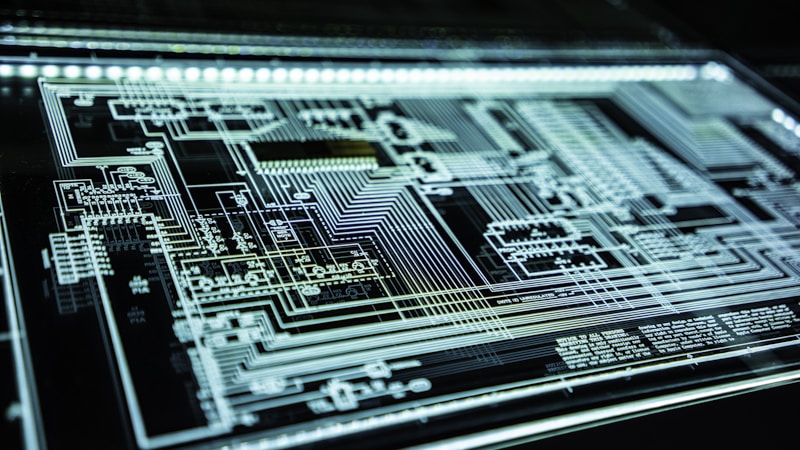
For decades, the trajectory of computing power followed a predictable rhythm: Moore’s Law. But as silicon transistors approach their physical limits, the industry is pivoting toward a fundamentally different paradigm. The result isn't just faster computers—it's machines that can simulate molecular interactions, optimize global logistics in real-time, and render photorealistic environments without cloud dependency.
Yesterday, three major semiconductor firms announced the public release of hybrid quantum-classical processors designed for desktop and server environments. Unlike the isolated, cryogenically cooled quantum computers of the past, these chips integrate qubit arrays directly alongside traditional CPU cores, bridging the gap between theoretical quantum advantage and practical utility.
Beyond the Hype Cycle
Quantum computing has long been trapped in a cycle of breakthrough announcements followed by years of technical refinement. The new architecture sidesteps the traditional error-correction bottleneck by using topological qubits, which are inherently more stable at room temperature. While not fully fault-tolerant yet, the error rates are low enough for specific workloads: drug discovery, financial modeling, and cryptographic analysis.
"We're no longer asking whether quantum will be useful. The question is now about accessibility. When a graphic designer, a biology student, or a logistics manager can harness quantum acceleration on their workstation, the technology has truly matured."
The implications for everyday software are already rippling through the development community. Frameworks like PyTorch and TensorFlow have released quantum-aware plugins, while game engines are experimenting with physics simulations that were previously impossible to run locally. Even operating systems are being redesigned with quantum thread scheduling in mind.

The Economic and Security Landscape
Naturally, the shift brings challenges. Traditional encryption methods face existential threats from quantum decryption capabilities, prompting a race to implement post-quantum cryptography (PQC) across banking, healthcare, and government infrastructure. Meanwhile, the supply chain for quantum components—particularly high-purity silicon and rare-earth superconductors—is experiencing unprecedented strain.
Yet the economic upside remains compelling. Analysts project that quantum-accelerated workflows could add over $450 billion to global GDP annually by 2032, primarily through efficiency gains in manufacturing, energy distribution, and AI training pipelines. For developers, this means a new era of algorithmic design where problems once deemed computationally intractable become routine exercises.
As we stand on the edge of this transition, one thing is clear: computing is no longer just about doing the same things faster. It's about solving problems we previously didn't know how to solve. The daily pulse of innovation just shifted into a new rhythm.