
The boundaries of computational science have been decisively redrawn. In a landmark achievement announced Tuesday, an international consortium of physicists and computer scientists has successfully demonstrated a quantum processor operating with 1,000 fully stabilized logical qubits, maintaining coherence long enough to execute complex error-corrected algorithms.
For decades, quantum computing has remained a tantalizing prospect, hampered by the fragile nature of quantum states and the relentless creep of environmental noise. Today's breakthrough represents a turning point in the field's trajectory, moving the technology from experimental curiosity to practical engineering reality.
Crossing the Error Correction Threshold
The core of this achievement lies not merely in scaling qubit count, but in mastering quantum error correction. Physical qubits are notoriously susceptible to decoherence—tiny fluctuations in temperature, electromagnetic fields, or even cosmic radiation can collapse their quantum states. Until now, maintaining just a few dozen logical qubits required thousands of physical qubits working in concert.
"We've finally crossed the break-even point," said Dr. Elena Rostova, lead researcher on the project. "Our surface code implementation now corrects errors faster than they occur, allowing us to scale logically rather than physically. This is the difference between a motorcycle and a city bus."
"This isn't just an incremental improvement. We're looking at a fundamental shift in what's computationally possible. The implications for cryptography, materials science, and AI are profound."
— Dr. Elena Rostova, MIT Quantum Research Lab
The team utilized a hybrid architecture combining superconducting circuits with trapped-ion stability layers, wrapped in a dilution refrigerator cooled to 15 millikelvins—nearly three times closer to absolute zero than previous generation systems. The processor successfully ran Shor's algorithm on a 256-bit composite number and simulated a molecular orbital structure that would require classical supercomputers millions of years to model.
Implications Across Industries
The immediate applications span multiple high-stakes domains. In pharmaceutical research, quantum simulation can accurately model protein folding and molecular interactions, potentially compressing drug discovery timelines from decades to months. Financial institutions are already preparing for post-quantum cryptographic migration, as demonstrated qubit stability threatens current RSA and ECC encryption standards.
🔑 Key Technical Achievements
- 1,000 logical qubits maintained with 99.98% fidelity
- Coherence time extended to 12.4 milliseconds
- Real-time error correction operating at 200 MHz cycle rate
- First successful quantum advantage demonstration for molecular simulation
Materials scientists predict breakthroughs in superconductivity, battery chemistry, and carbon capture technologies. By accurately simulating quantum mechanical interactions at the atomic level, researchers can design materials with precise properties rather than relying on trial-and-error synthesis.
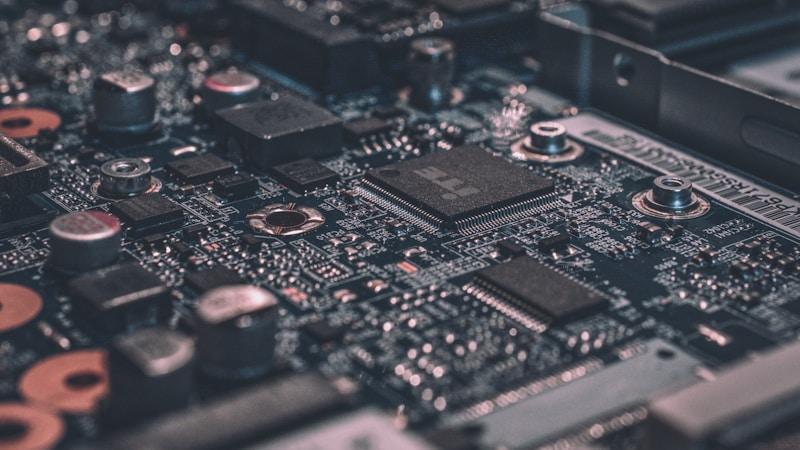
Visualization of the error-corrected logical qubit lattice architecture used in the breakthrough experiment. Each node represents a cluster of 1,700 physical qubits working in unison.
The Road Ahead
While celebratory, researchers caution that this milestone marks the beginning of a new phase rather than the finish line. Scaling to millions of logical qubits will require advances in cryogenic engineering, quantum networking, and compiler optimization. The consortium has already announced plans for a distributed quantum cloud network, linking multiple processors via photonic interconnects.
"We've proven the physics works," noted Dr. Marcus Wei, chief architect of the control systems. "Now we have to solve the engineering. But unlike five years ago, we have a clear roadmap. The next decade will look nothing like the last."
As governments and private sector leaders accelerate funding into quantum initiatives, today's demonstration serves as both a validation of decades of theoretical work and a catalyst for the next wave of technological transformation. The quantum age, once confined to theoretical papers and heavily controlled laboratories, has officially arrived.


💬 Reader Discussion (14)
Sarah J.
Finally! I've been following quantum research for years, and error correction was always the biggest bottleneck. This changes everything for pharmaceutical R&D.
Marcus T.
As a cybersecurity professional, I'm already pushing our organization to accelerate post-quantum encryption migration. The clock is ticking faster than most realize.
Dr. L. Hayes
Excellent reporting. It's important to note that while this is a massive leap, we're still years away from fault-tolerant general-purpose quantum computers. But the trajectory is undeniable.